

A ventilation fan keeps your garage cooler, drier, and safer by moving stale, humid, or fume-filled air outside. If your garage feels like a furnace in July, smells musty after rain, or stores anything that produces fumes, a ventilation fan is one of the most practical upgrades you can make.
At Bentley Home Inspections, our inspectors flag poor garage ventilation regularly in East Tennessee homes. This post explains how these fans work, what they protect, and when to bring in a pro.
What Happens When a Garage Has No Ventilation?
Most garages in East Tennessee are sealed structures with no connection to the home’s heating or cooling system. That combination traps a lot of problems:
- Heat from parked vehicles and summer sun
- Moisture rising from the concrete slab
- Fumes from lawn equipment, gas cans, and stored chemicals
- Stale air that seeps into the rest of the home through shared walls and gaps
Garages without ventilation can reach 100°F or more in warm weather. That’s not just uncomfortable. That heat radiates into rooms connected to the garage, raises the load on your air conditioner, and accelerates the breakdown of anything you store inside.
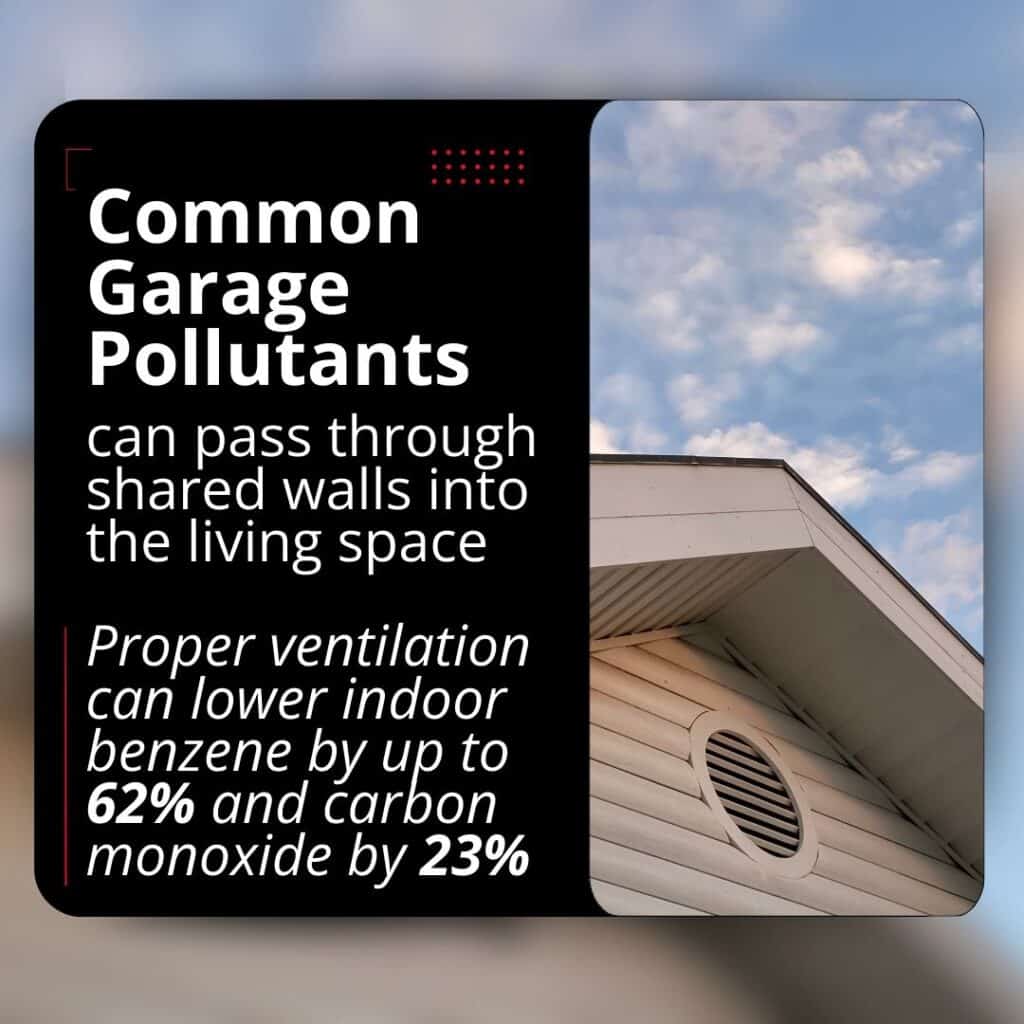
Moisture is just as much of a problem. According to EPA guidelines on indoor air quality, garage-related pollutants, including carbon monoxide, benzene, and volatile organic compounds, can enter the living space through shared walls, especially in attached garages with gaps around doors or pipes.
How a Ventilation Fan Fixes the Problem
A garage ventilation fan creates airflow by pulling indoor air out and letting cooler, fresher air replace it. Most are wall-mounted or ceiling-mounted and exhaust air to the outside through a vent. Some models use built-in thermostats or humidity sensors to run automatically when conditions hit a set threshold.
Once running, the fan reduces temperature, cuts humidity, and clears out pollutants before they reach the rest of the home.
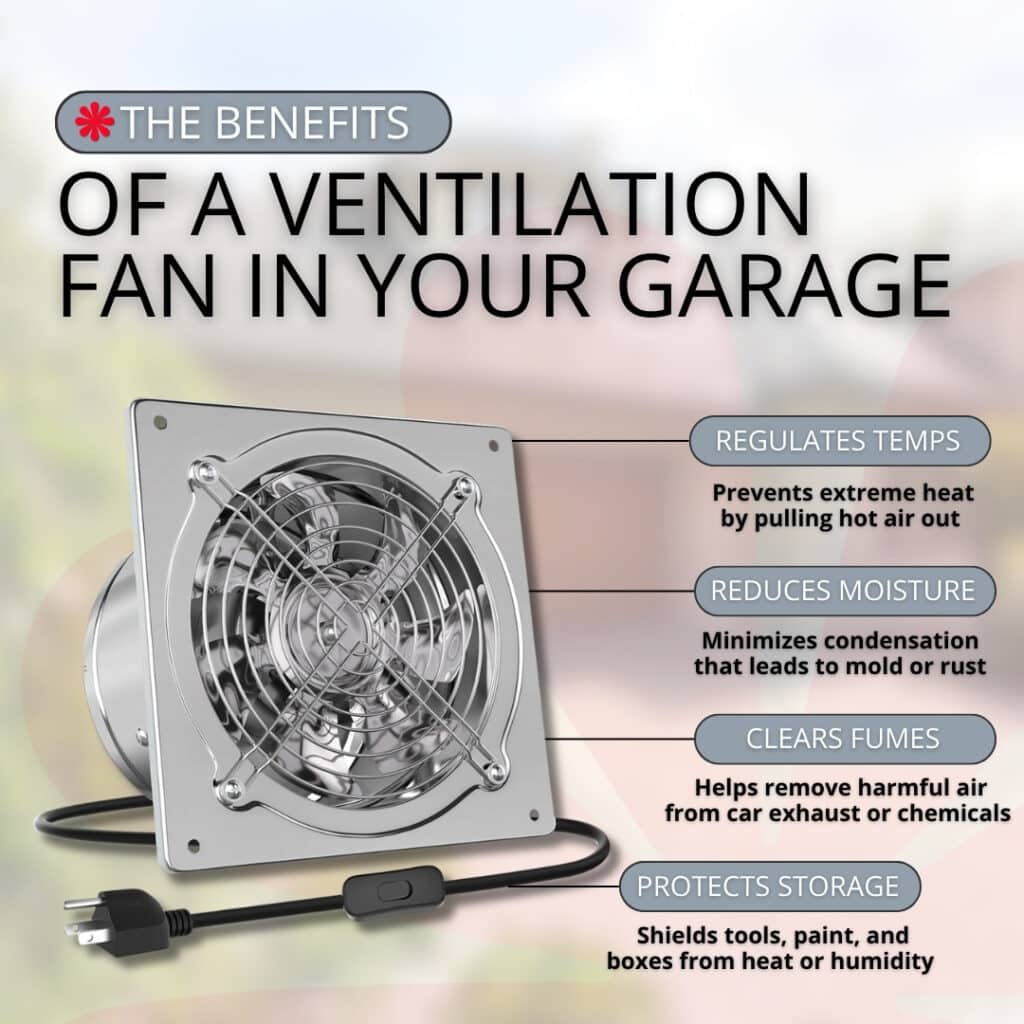
The Benefits of a Garage Ventilation Fan
A garage ventilation fan does more than cool things down. Here are the main ways it protects your home and the people in it.
Cleaner Air for Your Home
If your garage shares a wall with the house, the air inside it doesn’t stay contained. Fumes from vehicles, paint, fertilizers, and batteries can migrate through gaps in framing, around door sweeps, and through shared utility penetrations.
A ventilation fan reduces that risk by pushing those fumes out before they concentrate. For families with young children, older adults, or anyone with asthma or respiratory conditions, this is one of the most practical air quality improvements available in a home.
Less Mold and Moisture Damage
Garages are one of the most common spots for mold in residential homes. Concrete slabs release moisture vapor, wet vehicles and gear come in from rain, and there’s rarely enough airflow to dry things out.
Mold can begin growing in as little as 24 to 48 hours once moisture is present. A ventilation fan helps move damp air out before it settles on walls, shelving, drywall, and stored fabrics. If you’re already seeing signs of garage mold growth, a fan is part of the fix, but not the whole answer.
Lower Heat Buildup and Energy Costs
Garages connected to the home act like heat sponges in summer. That stored heat transfers through shared walls and ceilings into the conditioned living space, and your air conditioner compensates.
Moving hot air out of the garage reduces that transfer. Some homeowners in our service area report meaningful drops in cooling costs after adding a ventilation fan, especially in attached garages that share a full wall with the main living area. East Tennessee summers run hot and humid from May through September, which makes this benefit especially relevant here.
Better Conditions for Workshops, Gyms, and Storage
Metal tools rust in humid garages. Paint cans expand and leak. Electronics and seasonal items degrade faster when stored in spaces that routinely swing between temperature extremes.
If you use your garage as a workshop, home gym, or laundry area, a fan makes the space more comfortable and cuts down on dust and fume buildup while you’re inside. This applies especially to garages where wood finishing, painting, or any solvent-based work happens.
Fire Safety and Fuel Storage
Many garages store gas cans, propane tanks, batteries, lawn care chemicals, and fertilizers. These are all potential ignition sources when fumes accumulate. A ventilation fan reduces the concentration of flammable vapors in the space, which lowers the risk of ignition from a spark, an appliance cycling on, or an electrical fault.
This is one reason building codes in many jurisdictions recommend mechanical ventilation in attached garages, even when it isn’t strictly required.
Types of Garage Ventilation Fans
There are four main types to consider:
- Wall-mounted exhaust fans: The most common choice for residential garages. They mount through the exterior wall, are simple to wire, and move air efficiently in smaller spaces.
- Ceiling-mounted exhaust fans: Better for larger garages or spaces with limited wall access. These ducts air up through the ceiling and out through the roof.
- Solar-powered vent fans: These require no electrical connection and work well for eco-conscious homeowners with good roof exposure. Output is lower than wired fans.
- Thermostat or humidity-controlled fans: These run automatically when conditions hit a set point. They’re a good choice if the garage isn’t used daily.
How Many CFM Do You Need?
CFM (cubic feet per minute) is the standard measurement for fan airflow. A basic rule of thumb: multiply your garage’s square footage by ceiling height to get cubic feet, then size the fan to exchange that air volume every 1 to 3 minutes.
For a standard two-car garage of around 400 square feet with an 8-foot ceiling, that means roughly 1,000 to 1,200 CFM. The EPA recommends a minimum of 100 CFM ducted (or 80 CFM unducted) for attached garages. Larger shops, spaces with vehicles running inside, or garages used for chemical work need more.
Passive Ventilation vs. Active Fans
Passive ventilation relies on vents, gable openings, and natural airflow. It costs nothing to operate and can help when there’s a consistent breeze, but it doesn’t work on still days and can’t overcome a serious heat or fume load.
Active fans (exhaust fans, thermostat-controlled units) are the better solution for attached garages, garages in hot climates, or any space where fumes or moisture are a consistent problem. Hybrid setups that combine intake vents with an exhaust fan are often the most effective, since the intake gives the fan fresh air to draw from.
For context on how poor ventilation drives humidity-related damage throughout a home, basement humidity levels play a huge role in mold prevention.
What Does Installation Cost?
A basic wall-mounted exhaust fan runs $80 to $300 for the unit, depending on CFM capacity and features. Professional installation adds $150 to $400, depending on wiring access and wall type. Fans with built-in humidity sensors or thermostats cost more but reduce energy use and wear on the unit.
For most homeowners, the total investment lands between $250 and $700. That’s a modest spend compared to the cost of mold remediation, HVAC repairs from heat stress, or replacing ruined stored items.
Related Questions to Explore
Do I need a ventilation fan if my garage has windows? Windows help, but they aren’t a substitute for mechanical ventilation. Windows only move air when they’re open, and there’s a breeze, and leaving them open creates security and pest risks. A fan works on demand, in any weather, without keeping the garage open to the outside.
Can a garage ventilation fan reduce carbon monoxide? Yes, and this is one of the most important safety reasons to install one. Running a car, generator, or gas-powered lawn equipment in an enclosed garage produces carbon monoxide, which is odorless and dangerous at even modest concentrations. An exhaust fan actively moves that air out. That said, a fan is not a substitute for a carbon monoxide detector, which every attached garage should have.
How long does it take for a garage ventilation fan to work? In a standard two-car garage, a properly sized exhaust fan can turn the air over in 1 to 3 minutes when running. You’ll notice the temperature drop within 10 to 15 minutes in most cases. Fume clearance is even faster.
Does garage ventilation help with mold? It helps prevent mold from forming in the first place by reducing the humidity that mold needs to grow. If mold is already established, ventilation alone won’t remove it. You’ll need to address the moisture source and remediate the mold before improving airflow. Learn more about what’s involved in professional mold testing and inspection.
Is a ceiling fan the same as a garage ventilation fan? No. A ceiling fan circulates air within the space but doesn’t exhaust it to the outside. Circulation improves comfort but doesn’t reduce humidity, remove fumes, or lower carbon monoxide levels. For true ventilation, you need a fan that moves air through the garage and out.
For a related look at how garages and crawl spaces interact on moisture and air quality, see this overview of things to look for in a garage dehumidifier from Buckeye Basement Solutions.
When to Call a Professional
A ventilation fan is a straightforward home improvement, but a few situations call for professional help:
- Attached garages with existing electrical issues: Running wiring to a new fan location should be done by a licensed electrician if your panel is at capacity or the garage has outdated wiring.
- Visible mold or water damage: If you’re seeing mold on walls, the ceiling, or stored items, start with a mold inspection before improving airflow. Ventilation can prevent recurrence, but won’t fix an active mold problem.
- Homes where garage air quality is impacting the living space: Musty smells, persistent odors, or unexplained respiratory issues in rooms near the garage are worth a professional look. A home inspector can check the air barrier between the garage and living area, identify ventilation gaps, and note code compliance issues.
At Bentley Home Inspections, we serve Knoxville and East Tennessee homeowners and flag garage ventilation concerns as part of our standard home inspection. If you’re buying a home or have questions about your current garage setup, reach out to schedule an inspection.
Conclusion
A garage ventilation fan does more than cool things down. It protects air quality inside the home, prevents moisture and mold from getting a foothold, preserves stored tools and equipment, and reduces fire risk from stored fuels.
Key takeaways:
- Attached garages without ventilation can push heat, fumes, and moisture into the living space
- A wall-mounted exhaust fan sized to your garage’s square footage is the most practical solution for most homes
- Passive vents help, but can’t replace mechanical ventilation in hot climates or attached garages
If your garage has persistent odor, humidity, or heat problems, or if you’re buying a home and want to know what the inspection will flag, schedule online with the Bentley team today.