
Are you buying a home in East Tennessee? Or perhaps you already own one but aren’t sure how the waste system works. Either way, wondering if a property has a septic tank is more common than you might think. Not every home announces it. Many sellers do not bring it up unless asked directly, and previous owners sometimes had no idea either.
Knowing whether a home has a septic system, where the tank is located, and what condition it is in matters a great deal, especially during a real estate transaction. This guide walks through how to tell if a property has a septic tank, what the telltale signs look like, and what it means for buyers and homeowners across East Tennessee.
How Do I Know If I Have a Septic Tank?
The first step is to check official records. In Tennessee, the local health department permits and records septic systems at the county level. Many counties maintain permits and maps of septic installations that can help locate a septic tank and confirm whether one exists on the property. Your county’s environmental health office is the place to start, and a quick call or online search using the property address is often all it takes.
Additional ways to determine whether a property has a septic tank include:
Check The Utility Bills
Homes connected to a municipal sewer system show a sewer fee or sewer charge on the utility bill. If there is no sewer charge listed, the property very likely relies on a private septic system instead of public sewer.
Review Property Records
Property records such as deeds, building permits, and prior inspection reports can provide information on the layout and location of the septic tank and drain field. You can often find these records through the county register of deeds or assessor’s office.
Look At The Yard And Lawn
Septic systems include a tank and a drain field buried underground. An unusually green or fast-growing patch of grass in the lawn can indicate a septic tank or drain field below, due to extra moisture and nutrients from the system. A lush, green patch of lawn during a dry spell is a classic telltale sign. It often indicates a septic system sitting right beneath the surface.
Look For A Septic Tank Lid Or Access Port
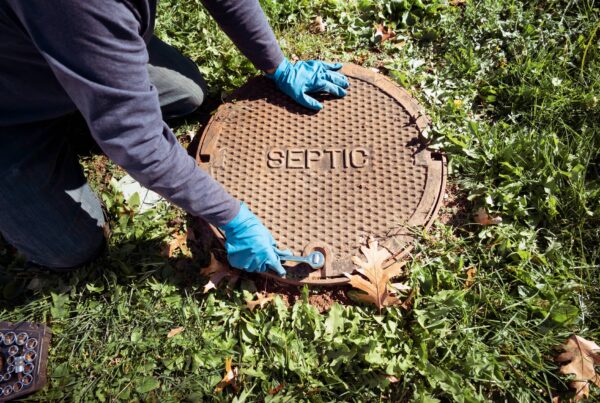
You will typically find septic tank lids a few inches to a foot below the surface, and they are made of concrete or plastic. Some older tanks have lids flush with the ground. A circular concrete cover or green plastic riser cap in the yard is a clear sign of a septic tank below.
Follow The Sewer Pipe From The Basement
Installers typically bury septic tanks underground, making them difficult to locate without some investigation. One reliable method is to follow the main sewer pipe from the basement, which typically leads to the tank located about 10 to 15 feet from the house.
Ask Neighbors
In rural and semi-rural communities, builders often constructed neighboring properties around the same time and under similar conditions. If neighbors are on septic, there is a good chance the subject property is as well.
Ask The Seller
In Tennessee, sellers are generally required to disclose known material defects. Ask directly if the home uses a public sewer or a private septic system. You should also find out when the tank was last pumped and if any records exist.

What Does a Septic System Actually Include?
A standard residential septic system has three main components:
The septic tank is a watertight underground container, typically made of concrete, fiberglass, or polyethylene, that receives all wastewater from the home. Inside the tank, solids settle to the bottom and form sludge, while grease and lighter materials float to the top. The liquid layer in the middle flows out to the drain field. Normal septic tank function depends on a healthy balance of bacteria that break down solids and sludge over time. Chemicals, heavy disposal use, or non-biodegradable items can disrupt this process. This causes the tank to fill faster and requires more frequent pumping.
The drain field is a network of perforated pipes laid in gravel-filled trenches underground. Wastewater from the septic tank disperses through these pipes into the surrounding soil, which naturally filters and treats it. Soil conditions in the area where the drain field is installed determine how effectively this process works.
The distribution box (in some systems) sits between the tank and the drain field and distributes wastewater evenly across the field lines. Not all systems have one, but it is a common component in older East Tennessee installations.
Signs a Home May Have a Septic System
Beyond records and lawn inspection, certain signs suggest a home uses a private septic tank rather than public sewer:
- The home is in a rural or semi-rural area with no obvious sewer infrastructure nearby
- An unusually lush or green patch of lawn above the suspected drain field that does not dry out with the surrounding grass
- A faint odor near a specific area of the yard, particularly after heavy rain or periods of heavy household water use
- Standing water or soft, soggy ground near the drain field that is not explained by recent rainfall
- Slow drains, gurgling or bubbling sounds in the pipes, or sewage backup in the lowest fixtures of the home
- The property has a well for drinking water, which commonly goes hand in hand with a private septic system on rural East Tennessee properties
Why Septic System Status Matters When Buying a Home
A septic tank requires regular maintenance, whereas public sewer connections do not. Regular inspections and pumping every three to five years are a normal part of responsible septic system ownership.
A tank left unpumped for years may be nearing failure. Repairs range from a few hundred dollars for minor service to over $10,000 for a full drain field replacement. A standard home inspection evaluates the visible and accessible components of the home but does not include a dedicated septic inspection, which is a separate service.
What a home inspection can flag are the warning signs, including slow drains, sewage backup, standing water near the suspected drain field, or odors that suggest a system under stress. A sewer scope camera inspection is also worth considering for any home where the waste line condition or connection type is unknown. A sewer scope evaluates the pipe running from the house. It can reveal blockages, roots, or damage in the line leading to the tank—all of which affect how the entire system functions.
What to Do If You Are Unsure Whether a Home Uses Septic
If you are buying a home in East Tennessee and are not certain of the waste system type, take these steps before closing:
- Contact the county health department and request the septic permit on file for the property address.
- Check utility bills and property records for any reference to sewer service or septic system installation.
- Ask the seller directly and review the property disclosure form for any noted septic information or known issues with the tank or drain field.
- Hire a licensed septic service provider to locate and inspect the tank and drain field. A professional can also use specialized equipment like ground-penetrating radar to locate a buried tank when records are incomplete.
- Include your home inspector in the conversation. While a full septic inspection is outside the scope of a standard home inspection, a thorough inspector can note conditions that warrant further investigation.

Other Related Questions
Can a home have both a septic tank and a well?
Yes, and across rural East Tennessee, this is very common. Properties not connected to municipal water or public sewer typically rely on a private well for drinking water and a septic system for waste. Tennessee health codes require minimum separation distances between a well and a septic tank to protect drinking water from contamination. A well inspection and water testing is a worthwhile step on any property with both systems to verify water quality and confirm the two are not interfering with each other.
What happens if a septic system fails during the buying process?
A failing septic system is a serious finding that needs to be addressed before or at closing. Depending on the severity, the buyer can negotiate for the seller to repair or replace the system, request a credit toward repair costs, or walk away if the issue cannot be resolved. Having a documented professional inspection report is essential to any of those conversations, which is part of why getting the right inspections done early in the transaction matters.
Does a slow drain always mean there is a septic problem?
Not always. A slow drain in a single fixture usually points to a localized clog in the household plumbing. Multiple slow drains, gurgling pipes, and sewage backups usually point to a systemic issue. This pattern strongly suggests a problem further down the line. A sewer scope camera inspection can help determine whether the issue is confined to the household plumbing or extends into the connection leading to the septic tank.
When to Call a Professional
If you are buying a home in East Tennessee and suspect it has a septic system, do not wait until after closing to investigate. Request county records, review utility bills, and schedule the appropriate inspections before you sign.
If you are already a homeowner and the septic tank has not been pumped in three to five years, or if you are noticing standing water near the drain field, slow drains, sewage backup, or unusual lawn growth above the tank, have a professional evaluate the system before a normal maintenance issue becomes a costly repair.
Conclusion
Knowing whether a home has a septic tank is not always obvious. The information is findable, and the stakes are high enough that it is worth investigating before committing to a purchase.
In East Tennessee, private septic systems are common across a wide range of counties and communities. Understanding what you are working with is a basic part of making a confident, informed decision.
At Bentley Home Inspection, we have been helping buyers and homeowners across East Tennessee understand the condition of their properties for over 25 years.
While a full septic inspection is outside our scope, our thorough home inspections and sewer scope camera inspections can identify red flags related to the waste system and point you toward the right next steps. Reach out or schedule online today.