Most homeowners think of mold as a warm, damp problem. Or maybe they don’t think of it at all. Bathrooms, basements, crawl spaces, and laundry rooms usually come to mind first. A freezer does not. Yet during moves, power outages, or extended vacancy, homeowners across East Tennessee are often surprised to find mold growth inside appliances, including freezers.
The short answer is yes, mold can grow in a freezer under the right conditions. Cold temperatures slow mold growth, but they do not eliminate moisture. When moisture, organic residue, and warmer temperatures come together, mold can develop even in places that seem unlikely.
This topic matters more than it sounds. Mold inside a freezer can point to broader moisture patterns in the home, especially during real estate transactions, long moves, seasonal power outages, or periods when a home sits vacant. Understanding how and why this happens helps homeowners, buyers, sellers, and real estate professionals avoid surprises and better evaluate a home’s overall condition.
Yes, mold can grow in a freezer when moisture is present, and temperatures rise above freezing long enough for spores to activate.
Freezers are designed to operate in cold, dry conditions. When functioning normally, mold growth is uncommon. Problems begin when moisture accumulates, and temperatures fluctuate. This often happens during power outages, when a freezer is unplugged during a move, or when a door is left open for an extended period.
Mold spores are always present in indoor air. They do not require light or warmth to survive. They only need moisture and a food source. Food residue, spills, cardboard packaging, and plastic containers can all provide what mold needs once thawing begins.
In East Tennessee, high outdoor humidity and seasonal storms increase the chance that moisture will linger longer than expected, especially during summer outages or spring storm events.
Why Power Loss Makes Freezers Vulnerable
Power loss is one of the most common triggers for mold growth inside a freezer.
When electricity goes out, frozen contents begin to thaw. Ice melts and water pools inside the appliance. If power is restored quickly, moisture may evaporate before mold has time to develop. If power remains out for several hours or days, moisture can soak into seals, shelving edges, and interior surfaces.
Once temperatures rise above freezing, mold can begin growing within one to two days. This risk increases significantly during warm weather, when indoor humidity is already elevated, and ventilation may be limited.
When power returns, the freezer may refreeze remaining moisture, which can temporarily hide early growth. Mold odors or visible staining often appear later, sometimes weeks after the initial outage, making the cause less obvious.
How Moving Creates the Perfect Conditions for Mold
Moving creates several conditions that allow mold growth to start unnoticed.
Freezers are often unplugged days before a move. Food residue may remain inside even after cleaning. Doors may be taped shut to prevent damage during transport. During storage or transit, the appliance may sit in a garage, storage unit, or truck where temperatures and humidity fluctuate.
When a freezer is left closed while unplugged, condensation builds quickly. Moisture becomes trapped, and air circulation is limited. This creates an ideal environment for mold growth, especially in rubber seals and corners.
This scenario is common in real estate transactions. Sellers move out, unplug appliances, and leave the home vacant. Buyers might discover mold odors or visible growth during final walkthroughs or after closing, even though the home may otherwise appear clean.
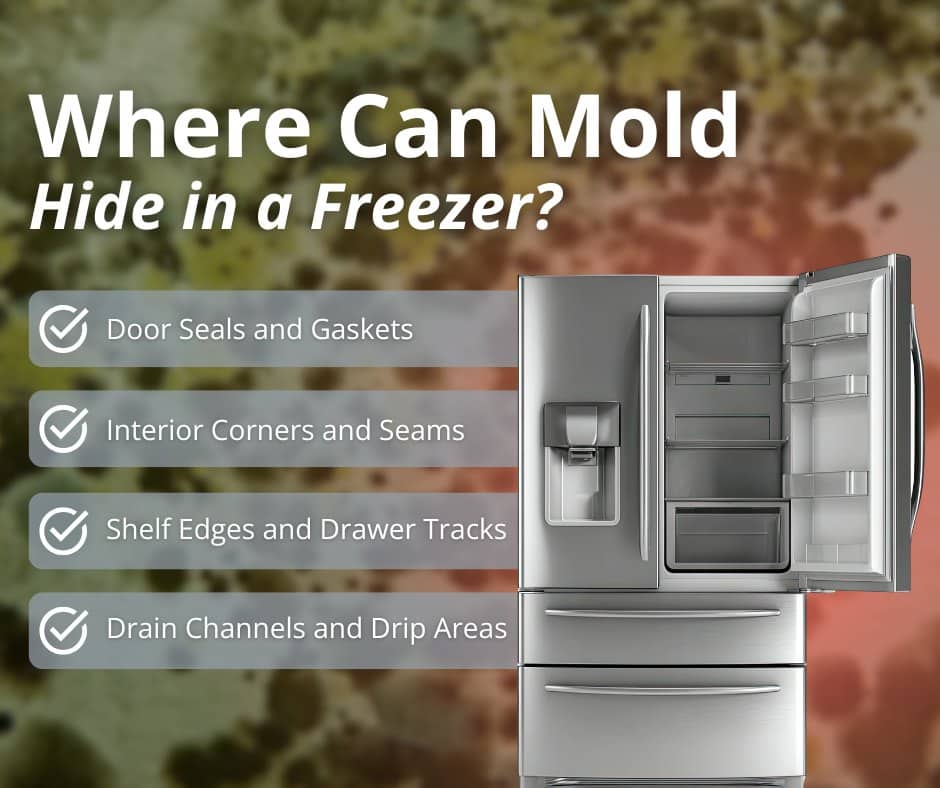
Where Mold Can Hide Inside a Freezer
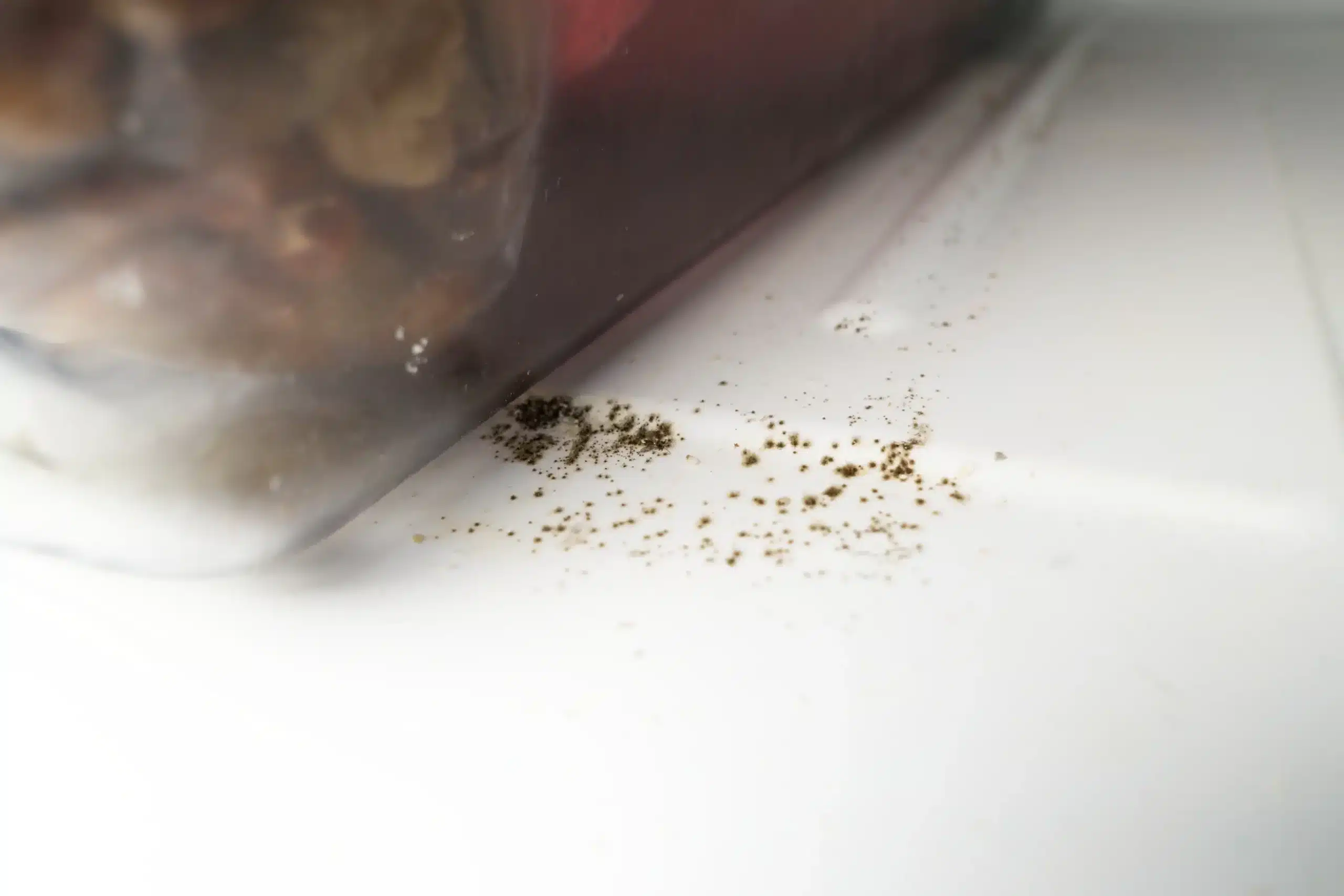
Mold inside a freezer is not always immediately visible.
Because mold often starts in soft or textured materials, it may not appear as obvious spots at first. A musty or sour odor is often the earliest warning sign.
When visible mold appears inside an appliance, it suggests that moisture was present long enough for growth to develop. That raises important questions about humidity control and ventilation in the surrounding space.
What Mold in a Freezer Can Indicate About the Home
Mold growth inside a freezer is rarely just about the appliance itself.
In East Tennessee homes, it may reflect broader moisture conditions, such as:
During a home inspection, visible mold or moisture staining inside appliances can prompt closer evaluation of kitchens, laundry areas, basements, crawl spaces, and attic ventilation. These areas often share the same moisture sources or airflow patterns.
Understanding this connection helps buyers and sellers see the issue as part of the home’s overall moisture behavior rather than an isolated problem.
How Inspectors Address Mold-Related Concerns
Home inspectors do not diagnose mold or perform mold testing. Their role is to identify visible conditions and contributing factors that may allow mold to develop.
When inspectors observe visible mold, staining, or persistent odors, they document those findings clearly. They also look for conditions that could be contributing to moisture buildup, such as poor ventilation, plumbing leaks, insulation gaps, or drainage issues.
In real estate transactions, this documentation helps buyers and sellers understand what is known and what may need further evaluation. Inspectors may recommend additional review by a qualified third party when conditions warrant it, but they do not speculate or overstate findings.
This approach provides clarity without jumping to conclusions or encouraging unnecessary work.
When Mold in a Freezer Should Raise Red Flags
Not every instance of mold inside a freezer means there is a serious problem, but some scenarios deserve closer attention.
Situation Observed
What It May Suggest
Why It Matters
Mold after a short outage
Temporary thawing
It may be limited, but it should be cleaned carefully
Mold after a long vacancy
Ongoing humidity issues
It could affect other areas of the home
Mold plus musty kitchen odors
Hidden moisture nearby
Worth further inspection
Mold during a home sale
Deferred maintenance
May impact negotiations or repairs
Repeated appliance mold
Environmental issue
Signals a broader moisture problem
This context helps homeowners and buyers decide whether the issue is likely isolated or part of a larger pattern.
Other Cold Areas Where Mold Can Develop
Freezers are not the only cold areas where mold can appear.
In East Tennessee, temperature swings combined with humidity create frequent condensation risks. Mold growth in cold areas often points to insulation, air sealing, or ventilation issues rather than active leaks.
How Homeowners Can Reduce Mold Risk During Moves and Outages
While mold cannot always be prevented, risk can be reduced with practical steps.
Helpful practices include:
Cleaning and drying appliances thoroughly before unplugging
Scheduling a home inspection after extended outages
These steps are especially important for homes that will be unoccupied for more than a few days or during storm season.
Other Related Questions
What other household issues can point to excess moisture? Excess moisture does not always show up as visible mold. It often appears as condensation on windows, musty odors, staining on walls or ceilings, peeling paint, or rust on metal fixtures. These signs can indicate ventilation issues, drainage problems, or humidity levels that deserve closer attention during a home inspection.
Why do moisture problems show up after power outages or vacancy? When a home is unoccupied or loses power, airflow drops, and humidity can rise. Systems like HVAC units, exhaust fans, and dehumidifiers may not run consistently, allowing moisture to linger. This is why inspections after long outages or vacant periods often uncover issues that were not previously noticeable.
Are appliances a common place for inspectors to notice moisture concerns? Yes. Appliances like freezers, refrigerators, water heaters, and washing machines can reveal patterns of moisture exposure. While inspectors do not evaluate appliance performance in detail, visible conditions around or inside appliances can provide useful clues about humidity, drainage, or maintenance habits.
How does moisture affect different areas of a home? Moisture tends to move and collect in predictable areas, such as basements, crawl spaces, attics, kitchens, and laundry rooms. When moisture shows up in one location, inspectors often pay closer attention to other areas where similar conditions may exist, especially in homes with limited ventilation.
When to Call a Professional
You should consider a professional home inspection if:
Visible mold appears in unexpected places
A home experienced an extended power loss
The property was vacant for an extended period
Musty odors persist after cleaning
You are buying or selling a home
A home inspection helps identify visible concerns and moisture-related conditions, so informed decisions can be made.
Conclusion
Mold can grow in a freezer after moving or power loss when moisture and warmer temperatures are present. While it may seem like a minor issue, it often reflects how moisture behaves throughout the home.
For homeowners, early awareness helps prevent further problems. For buyers and sellers, inspection findings provide clarity and reduce surprises. For real estate professionals, inspections help keep transactions moving smoothly.
Bentley Home Inspection serves homeowners and real estate professionals throughout East Tennessee by identifying visible conditions, moisture concerns, and signs of related issues so informed decisions can be made at every stage of ownership.