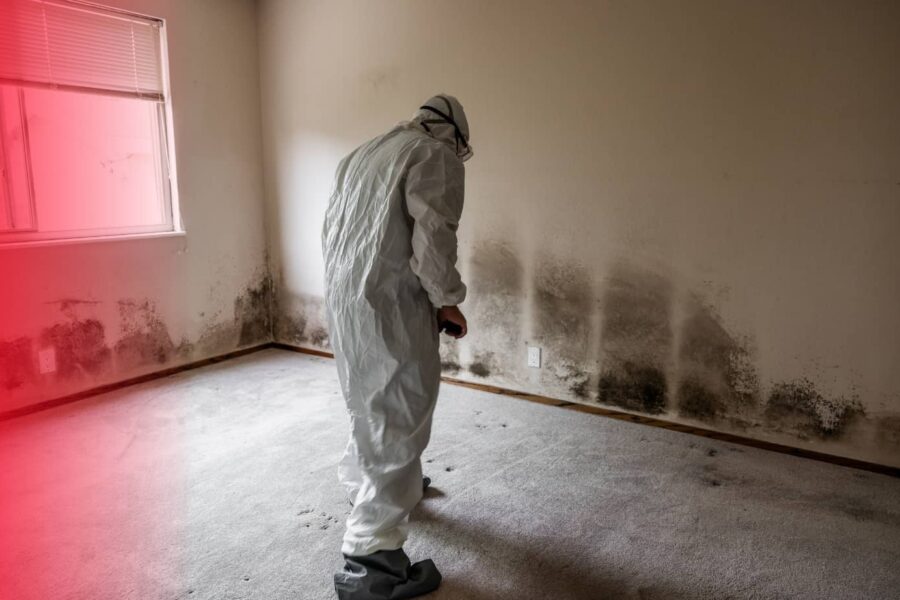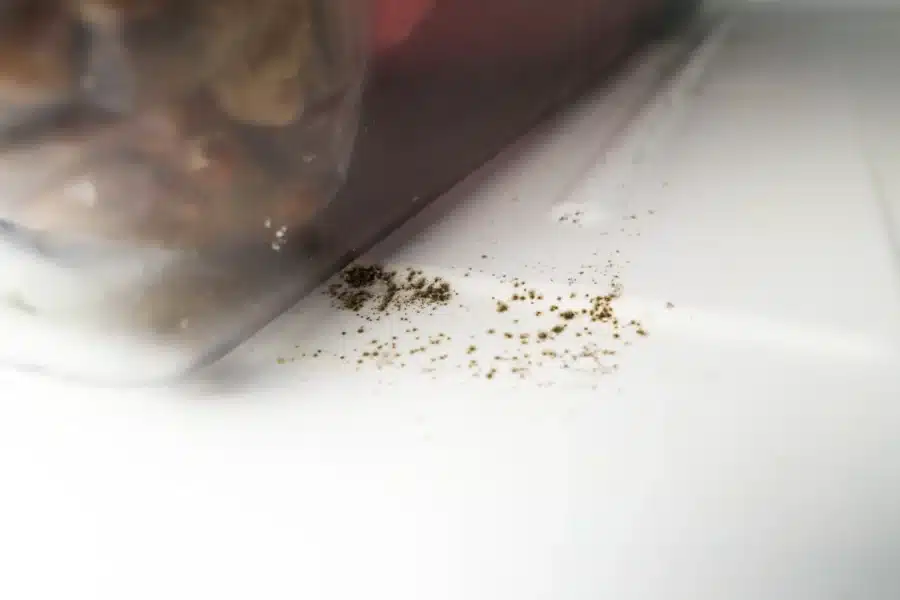

Rubbing alcohol can kill mold, but only on hard, non-porous surfaces like glass, tile, and metal. On drywall, wood, or carpet, it barely touches the problem. If you’ve spotted a musty patch in your bathroom or basement, reaching for the alcohol bottle is a natural first move. It’s cheap, it’s already under your sink, and it feels like a fast fix.
But does it actually solve anything, or does it just spread spores around and buy you a few weeks before the mold comes back? At Bentley Home Inspection, our team tests for mold across East Tennessee homes every week, and we see this DIY habit backfire often. Here’s what alcohol can and can’t do, and what actually works instead.
Does Rubbing Alcohol Actually Kill Mold?
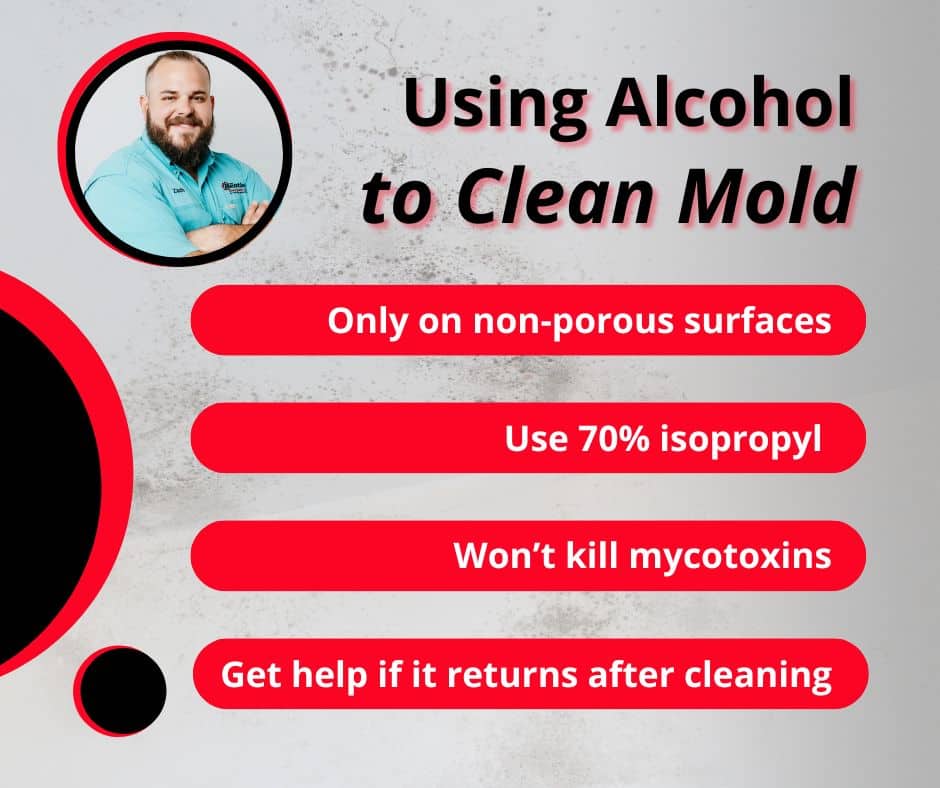
Yes, but only on the surface, and only on materials that don’t absorb moisture. Isopropyl alcohol (rubbing alcohol) breaks down mold’s cell walls and dries out the spores it touches. Most guides recommend the 70% concentration rather than 91% or 99%. The stronger versions evaporate too fast to sit on the mold long enough to work, while 70% alcohol lingers just long enough to break through.
That’s the part alcohol gets right. Here’s where it falls short: even where it kills mold on contact, it doesn’t reach mold that has already grown into a surface. It also does nothing for mycotoxins, the byproducts some mold species leave behind that cause the health complaints people associate with mold exposure. Wiping a spot clean with alcohol can make a surface look fine while the real problem sits untouched a few millimeters below.
Why Porous Surfaces Beat Alcohol Every Time
Alcohol can’t reach mold once it has rooted into a porous material like drywall, wood, or carpet fibers. Mold spreads by sending out thread-like roots called hyphae that grow down into whatever it’s feeding on. On a sealed countertop, there’s nowhere for those roots to go, so alcohol wiped across the surface reaches all of it. On drywall, the paper facing soaks up moisture and gives mold a path straight into the wall cavity, well past where any liquid cleaner can follow.
The same problem shows up with soft materials. Mold on carpet or upholstery often looks like it wipes away, but the padding underneath can stay contaminated. If a carpet has been wet for more than 24 to 48 hours, treat it as a candidate for replacement rather than cleaning, especially in a home with young kids or anyone with asthma.
Alcohol vs. Bleach vs. Hydrogen Peroxide vs. Vinegar
Hydrogen peroxide beats alcohol for most household mold jobs, and vinegar edges it out for porous stains. Here’s how the common options stack up:
| Cleaner | Best for | Limitation |
|---|---|---|
|
Rubbing alcohol (70%) |
Small spots on glass, metal, sealed tile | Doesn’t penetrate porous material; evaporates fast |
| Bleach | Hard, non-porous, high-contrast stains |
Harsh fumes; adds moisture that can feed mold in porous materials |
| Hydrogen peroxide (3–10%) | Both porous and non-porous surfaces | Slower acting; test fabric first for discoloring |
| White vinegar | Fabric, grout, mild porous stains | Strong smell; not registered as a fungicide |
For drywall, wood, or anything absorbent, hydrogen peroxide is usually the better DIY option. Spray it on, let it sit for 10 to 15 minutes, then wipe and repeat if needed. Never mix bleach and alcohol, or bleach and ammonia-based cleaners. The combination can create toxic fumes in an enclosed bathroom or basement.
Is It Ever Okay to Use Alcohol on Mold?
Yes, in a few specific situations:
- Light mold spots on hard, sealed surfaces like glass or plastic
- Small personal items such as tools, glasses cases, or plastic containers
- A quick wipe-down after mold has already been removed by other means
Skip it for anything larger than a small spot, or anything that’s soaked into walls, ceilings, or flooring. Always work in a ventilated room and wear gloves when using any of these cleaners.
Why Mold Keeps Coming Back
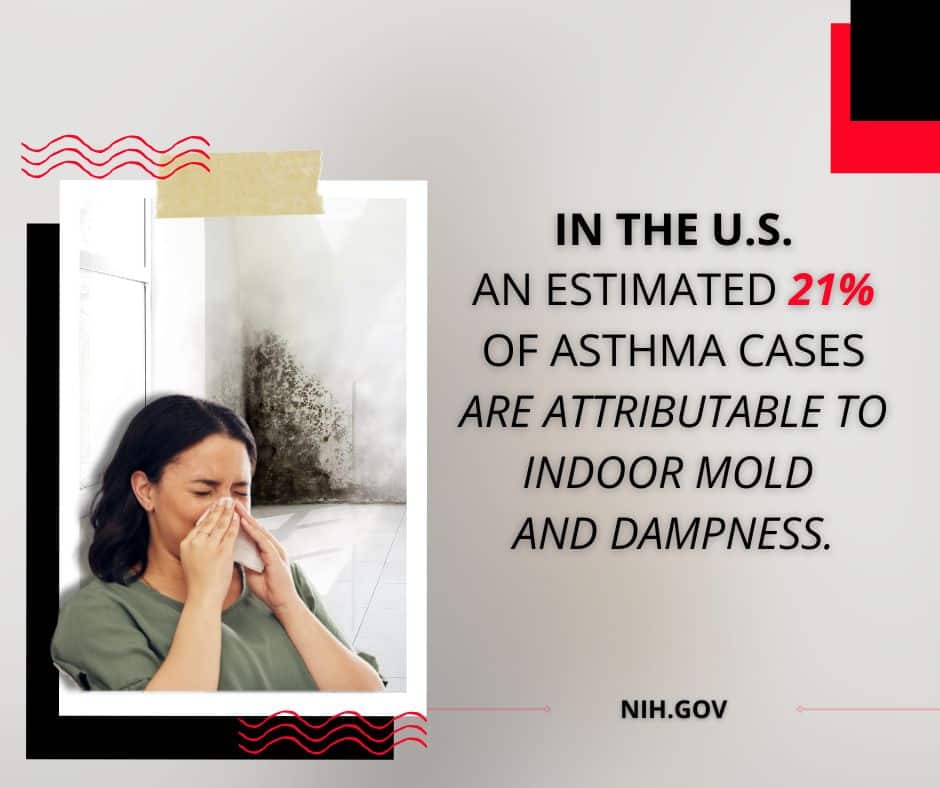
Mold keeps coming back because cleaning the surface doesn’t fix the moisture feeding it. Mold is a living organism that spreads by releasing spores into the air, and those spores settle wherever there’s enough dampness to grow. Bathrooms, basements, crawlspaces, and areas around slow leaks are the most common hosts. In the U.S., an estimated 21% of asthma cases are linked to mold and dampness indoors, according to the EPA.
Mold doesn’t even need a warm room to take hold. It can grow in surprisingly unlikely, cold spots if moisture and organic material are both present. Wherever it shows up, the pattern is the same: clean the surface without addressing the water source, and the mold returns.
How to Keep Mold from Coming Back
Fixing the moisture source matters more than the cleaning product you choose. A few steps that make the biggest difference:
- Repair plumbing leaks or roof issues as soon as you spot them
- Run bathroom fans, or crack a window, after every shower
- Keep indoor humidity below 60%, ideally closer to 40%, with a dehumidifier in damp areas
- Make sure attics and crawlspaces have working ventilation
- Check behind furniture and appliances for hidden water stains
Cleaning is one step. Drying out the space and keeping it dry is what actually keeps mold from coming back.
Related Questions to Explore
Does 91% rubbing alcohol work better than 70% on mold? No. The 91% and 99% concentrations evaporate too quickly to sit on the mold long enough to break it down. The 70% concentration, diluted with water, actually performs better because it has more contact time before it dries.
Can I mix alcohol and bleach to kill mold? No, don’t mix them. Combining alcohol and bleach (or bleach and ammonia) can produce toxic fumes in a closed space like a bathroom or basement. Use one product at a time and ventilate the room while you work.
Does alcohol kill mold on carpet? Rarely all the way through. Alcohol can lighten a surface stain, but mold that has reached the carpet backing or padding usually needs extraction or replacement, especially after any standing water.
What about mold growing on drywall? Alcohol isn’t enough on its own. Once mold has spread into the paper facing of drywall, hydrogen peroxide or professional remediation reaches further than a surface wipe-down.
Can mold cause allergy symptoms even after I clean it? Yes, if spores or mycotoxins are still present in the air, not just on visible surfaces. That’s part of why a home allergen test can catch what a visual check misses.
Does vodka kill mold like rubbing alcohol does? Not as well. Most vodka is around 40% alcohol, well below the 70% concentration that gives rubbing alcohol its effectiveness. It may knock back a very small spot, but it’s not a reliable substitute.
When to Call a Professional
Call a professional once mold covers more than 10 square feet, keeps returning after you clean it, or you can’t find where the moisture is coming from. You should also call someone if the mold is inside your HVAC system, has spread across multiple rooms, or if anyone in the home is having ongoing respiratory symptoms.
A qualified home inspector can identify the moisture source, check for hidden growth, and tell you whether you’re looking at a cleaning job or a remediation job. If air quality is part of the concern, it’s worth knowing that a general home inspection can include mold and air quality checks as part of a broader look at the home.
Final Thoughts
Rubbing alcohol has a real, narrow use: small spots on hard, sealed surfaces. Outside of that, it won’t reach mold that’s rooted into drywall, wood, or carpet, and it won’t stop mold from coming back on its own.
A few things worth remembering:
- Alcohol works on contact, on non-porous surfaces only
- Hydrogen peroxide and vinegar generally outperform it on porous materials
- Fixing the moisture source is what actually prevents mold from returning
If you’re not sure what you’re dealing with, Bentley Home Inspection offers mold testing across East Tennessee and can help you figure out your next step with confidence.