
A stackable washer and dryer is two separate front-load units secured one on top of the other with a stacking kit, and the most important thing to get right is the installation, not the brand. Done well, a stackable setup frees up floor space in a closet or small laundry room.
Done poorly, it hides venting and plumbing problems that show up later as a fire risk or water damage. At Bentley Home Inspection, these are exactly the issues we flag during East Tennessee home inspections.
Here is what to check before you buy the units or the house they came with.
What Is a Stackable Washer and Dryer?
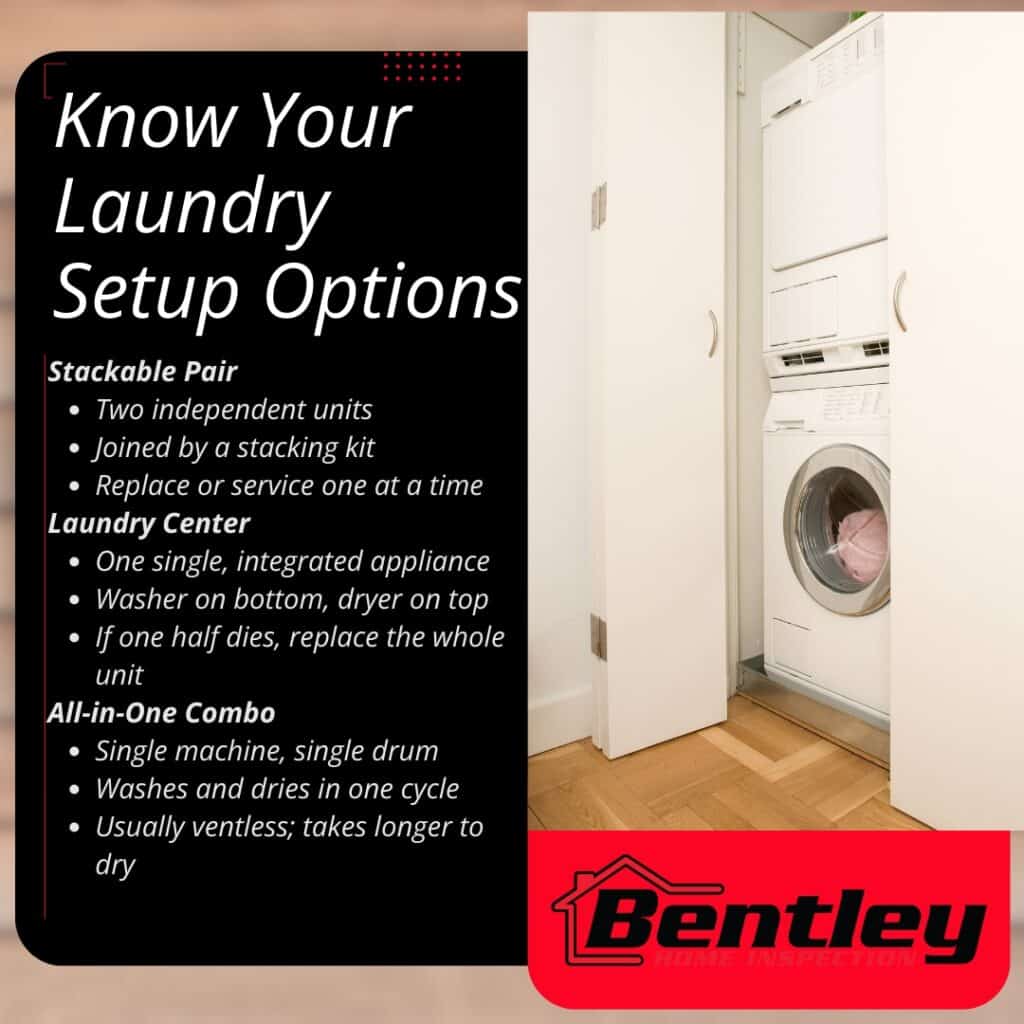
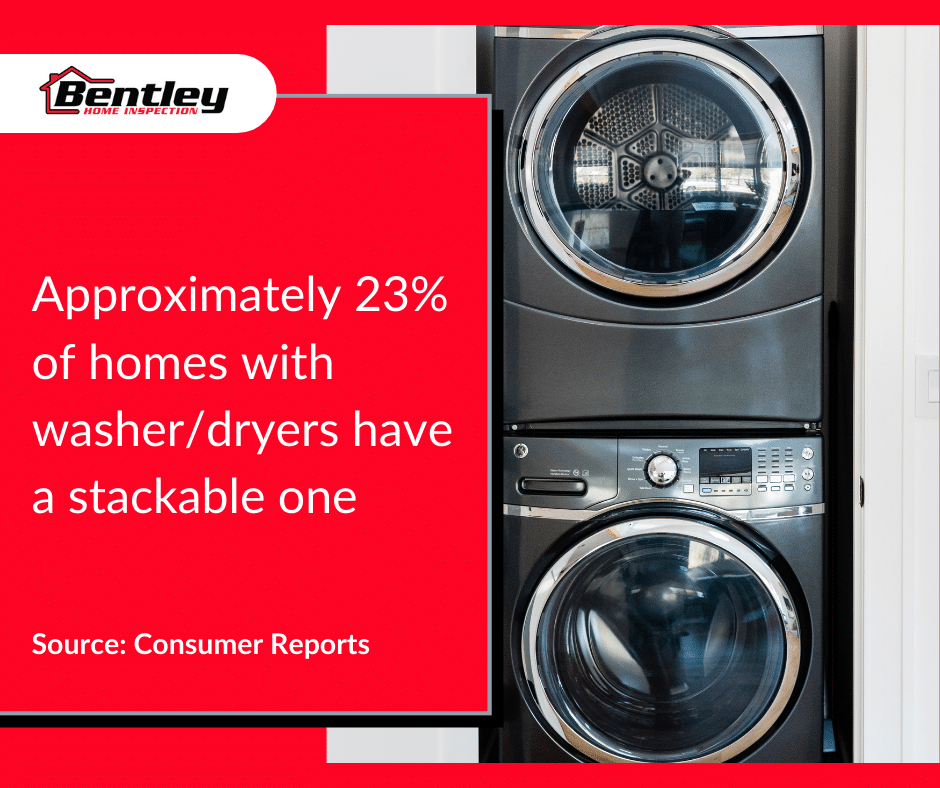
A stackable washer and dryer is a matched pair of front-load machines designed so the dryer can sit on top of the washer, joined by a manufacturer’s stacking kit.
The two units still work independently, so you can service or replace one without the other. That independence is the main reason people choose stackable over an all-in-one unit.
Stackable vs. laundry center vs. all-in-one
These terms get mixed up constantly, and the difference matters when you shop or inspect:
- Stackable: two separate units (washer + dryer) joined by a stacking kit. Serviceable individually.
- Laundry center (stacked unit): one integrated appliance with the washer on the bottom and dryer on top. If one half fails, you usually replace the whole thing.
- All-in-one combo: a single drum that washes and dries. Often ventless, with longer cycles.
Can You Stack Any Washer and Dryer?
No. You can only stack front-load units that the manufacturer rates as stackable, and you generally need a matching washer and dryer plus the correct stacking kit for that model.
Top-load washers cannot be stacked, and using a kit not made for your units is a safety risk because the dryer can shift or fall during a spin cycle. Always confirm the model is stackable and use the brand-specified kit.
Sizing and Clearance: Will It Fit?
Measure before you commit, because stackable units need clearance on every side plus room for the door swing and venting. Compact and full-size machines have very different footprints.
|
Type |
Typical width |
Stacked height |
Best for |
|---|---|---|---|
|
Compact (24 in) |
24 inches |
~67–72 inches |
Apartments, condos, closets |
|
Full-size (27 in) |
27 inches |
~74–80 inches |
Standard laundry closets/rooms |
Leave room above the stack for the lid/door to open, a few inches behind for hoses and the vent, and confirm the laundry closet door can close. In many Knoxville condos and Sevierville cabin rentals, the closet height is the limiting factor, so check the stacked height against the opening first.
Hookups: Electrical, Plumbing, and Venting
Stackable washers and dryers need the same connections as standard units, with venting being the detail people miss.
You will need a 120V outlet for the washer, the correct power for the dryer (a standard 120V for gas dryers, or a dedicated 240V outlet for electric dryers), hot and cold water supply lines, a drain, and, for vented dryers, a proper exhaust duct to the outside.
The tight enclosures stackables live in make the vent run easy to crush or over-lengthened, which is where problems begin.
What a Home Inspector Checks on Stackable Units
During a home inspection, the laundry area gets more attention than buyers expect, because stackable installs concentrate several risks in one cramped space. Inspectors typically look at:
- Dryer venting and lint buildup. A crushed, kinked, or too-long flexible duct traps lint, and lint is the leading item first ignited in dryer fires. The NFPA reports that failure to clean is the leading cause of home dryer fires, a risk that rises when the dryer is boxed into a closet.
- Electrical. Whether an electric dryer has its own properly rated 240V circuit, not an adapter or extension cord.
- Plumbing and hidden leaks. Supply hoses, drain connection, and signs of past leaks behind the bottom washer, which is hard to see once units are stacked.
- Stacking-kit stability. Whether the correct kit is installed and the stack is level and secure.
- Moisture and mold. Ventless or poorly vented units in a closed closet can raise humidity, a concern we cover in our mold testing services. Proper exhaust matters in any enclosed space, the same principle behind a garage ventilation fan.
Common Problems We Find with Stackable Units
Because stackable units sit in tight, often closed-off spaces, the same handful of issues come up again and again during inspections. The most common is restricted dryer venting. Flexible foil or vinyl duct gets crushed behind the stack or runs too far to the exterior, which traps lint, lengthens dry times, and raises fire risk.
A close second is improper electrical: an electric dryer running off an adapter or sharing a circuit instead of having its own dedicated 240V line.
We also frequently find moisture problems, including small supply-hose drips behind the bottom washer that go unnoticed for months and rubber door gaskets on front-loaders that grow mold when the door stays shut between loads.
Finally, we see stacking kits that are missing entirely or mismatched to the units, leaving the dryer able to walk or vibrate loose. None of these is visible at a glance once the units are installed, which is why a closer look matters.
Pros and Cons of Going Stackable
Stackable units win on space and lose a little on convenience, so the right choice depends on your room. Quick summary:
- Pros: saves floor space, fits closets and small homes, units serviced independently, modern front-loaders are water-efficient.
- Cons: higher reach to the top dryer, tighter access for repairs and vent cleaning, front-loaders need door-left-open drying to prevent gasket mold, and installation mistakes are easier to hide.
Simple Maintenance That Prevents Most Issues
A little routine care keeps a stackable setup safe and running well. Clean the lint screen after every load, and have the full dryer vent run cleaned at least once a year, more often if dry times are creeping up.
Periodically check the washer supply hoses for bulges or seepage and replace rubber hoses with braided stainless steel, which resist bursting. Leave the front-loader door cracked open between loads so the drum and gasket can dry, which prevents the musty smell and mold common to front-load machines.
Confirm the units stay level, since an unlevel stack vibrates harder and stresses the kit. For homeowners in humid parts of East Tennessee, keeping the laundry closet ventilated also helps, because trapped heat and moisture from the dryer can encourage mold in a sealed space.
Related Questions to Explore
Do stackable washers need special hookups?
They need the same hookups as standard units: a 120V outlet for the washer, the right power for the dryer (120V for gas, a dedicated 240V circuit for electric), hot and cold water lines, a drain, and proper venting for a vented dryer. The connections are standard; the tight space is what makes correct installation important.
What size is a stackable washer and dryer?
Compact stackable units are about 24 inches wide and roughly 67 to 72 inches tall when stacked. Full-size units are about 27 inches wide and 74 to 80 inches tall stacked. Always measure your closet height and door opening before buying.
Is it better to stack a washer and dryer or leave them side by side?
Stack them when floor space is tight, such as a closet, condo, or small home. Leave them side by side when you have the width and want easier access, a folding surface on top, and simpler vent and repair access. Both perform the same; it is a space-versus-access tradeoff.
Do stackable dryers need to be vented?
Most do. Traditional electric and gas stackable dryers need an exhaust vent to the outside. Ventless heat-pump or condenser dryers do not, which is why they appear in apartments where outside venting is not possible, though they dry more slowly and add humidity to the room.
When to Call a Professional
Call a professional when you are buying a home with a stackable laundry setup, installing electric (240V) units, or you notice slow drying, a hot laundry closet, or musty odors, because each of those points to a venting, electrical, or moisture issue that is hard to see once units are stacked.
A licensed home inspector checks the vent run, the electrical circuit, the plumbing connections, and the stack stability, then puts it all in writing.
Bentley Home Inspection serves Knoxville, Maryville, Sevierville, Loudon, and the surrounding East Tennessee communities, and we explain what we find in plain language so you can make a confident decision.
Conclusion
The takeaways for stackable laundry:
- Only stack manufacturer-approved front-load units with the correct kit, and measure the closet height before buying.
- The biggest risks are dryer venting (fire) and hidden leaks in the tight cabinet, not the brand on the door.
- If you are buying a home with one, have the laundry hookups and venting inspected.
Buying or selling a home in East Tennessee? Schedule a home inspection with Bentley Home Inspection, and we will check the laundry setup along with the rest of the house.