
What Is a Sewer Scope Camera Inspection?
A sewer scope camera inspection sends a small, waterproof camera through your main sewer line. The camera records the pipe’s condition from the inside. A technician feeds it through a cleanout or drain access point. The camera then travels the full length of the pipe, from the house to the municipal connection or septic tank.
The live video feed shows pipe material, joint condition, and any damage in real time. A general home inspection only checks what’s visible above ground. A sewer scope shows the actual state of the buried line. That matters most for older homes, homes with large trees nearby, and any property built before 1980.
The Sewer Scope Inspection Process, Step by Step

A sewer scope inspection follows the same basic process every time:
- Locate the cleanout. The technician finds and removes the cleanout cap, the standard access point for most sewer lines. Without one, a toilet may need to come out instead.
- Insert the camera. A flexible, waterproof camera on a long cable goes into the line. It sends live video back to a monitor.
- Navigate the pipe. The camera travels from the house to the municipal connection or septic tank. The technician pauses at anything unusual.
- Document every defect. The video captures cracks, root intrusion, offset joints, and blockages, each with its exact location.
- Deliver a report. You get a video copy plus a written report that explains the findings.
The process is noninvasive. No one digs up your yard, and you can stay in the home the whole time.
How Much Does a Sewer Scope Camera Inspection Cost?
A sewer scope camera inspection typically costs between $125 and $700. Most homeowners pay closer to $300 when they bundle it with a general home inspection. A missing cleanout can push the cost higher. The technician may need to access the line through a toilet instead.
That upfront cost is small next to the risk it covers. A simple clog might cost a few hundred dollars to fix. A full line replacement can run $15,000 or more, and most homeowners insurance policies don’t cover sewer lateral damage. A $300 inspection that catches a cracked pipe before closing can save a buyer that entire bill.
Common Issues a Sewer Scope Camera Finds
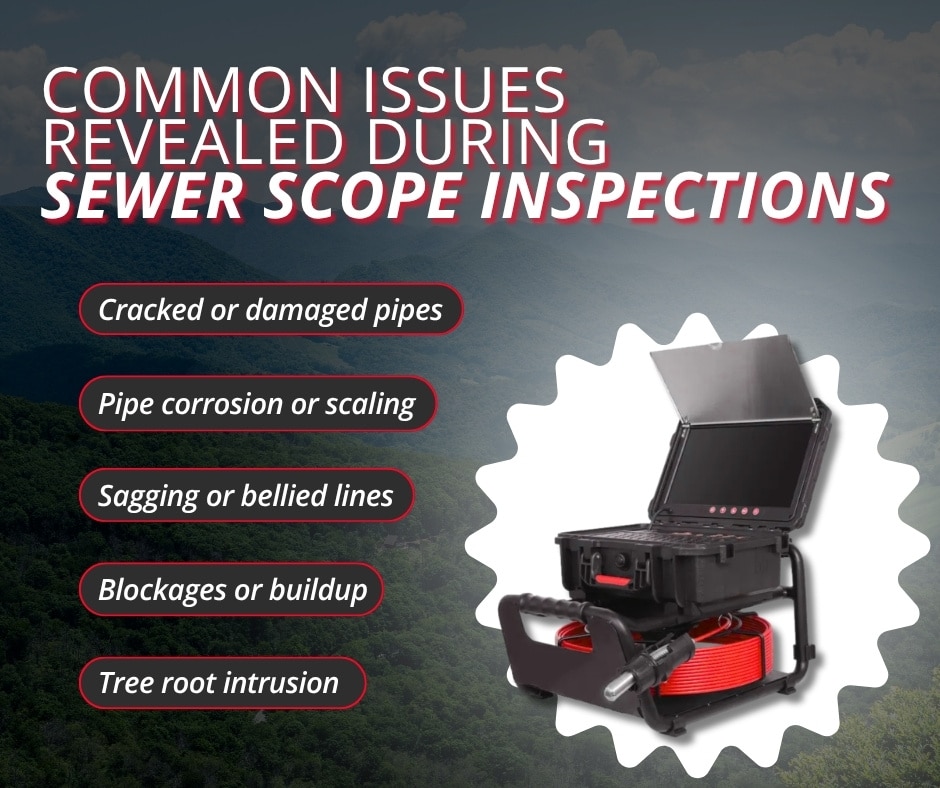
The camera catches problems long before they surface as a backup or a soggy yard. Here are the most common findings:
- Tree root intrusion: roots work through joints and hairline cracks, then expand into a blockage
- Cracked, broken, or collapsed pipe: age, ground shifting, or heavy equipment above the line can cause structural failure
- Offset or separated joints: these sections no longer line up, and waste and debris collect there
- Pipe corrosion: older cast iron lines often show a thin or flaking interior
- Bellies (sagging sections): these low spots hold standing water and waste, and cause repeat backups
- Clogs and debris: grease buildup, construction material, or objects that never belonged in the drain
A slow-draining kitchen sink can sometimes point to this same kind of blockage further down the line. That’s one more reason to scope the full line instead of guessing from symptoms alone.
Signs You Might Need a Sewer Scope Inspection Soon
A few warning signs suggest the sewer line needs a closer look, even outside of a home purchase:
- Slow drains in multiple fixtures at once, not just one sink or tub
- Gurgling sounds from drains or toilets after you run water elsewhere in the house
- Sewage odors near the yard, a floor drain, or a cleanout cap
- A soggy or unusually green patch of lawn above where the line runs
- Repeated clogs that keep coming back, even after clearing a drain with a snake or plunger
Any one of these might be minor on its own. Several happening together usually mean the problem sits deeper than a fixture-level fix can reach.
Why Tree Roots Cause the Most Sewer Line Problems in East Tennessee
Tree roots cause more sewer line blockages than anything else. East Tennessee’s mature tree canopy makes this a regional issue that most homeowners underestimate. Roots seek out the warmth and moisture that seep through tiny cracks and joints in a sewer pipe. Once a root finds a way in, it keeps growing. Eventually it forms a dense mat that traps everything moving through the line.
Older Knoxville-area neighborhoods carry a higher risk of this exact problem, especially near mature oaks, maples, or willows. Clay and cast-iron pipe make it worse: their joints give roots an easier way in than modern PVC does.
Who Pays When a Sewer Scope Finds a Problem?
The homeowner almost always pays to repair the sewer lateral, the pipe running from the house to the municipal main. That’s true even when tree roots cause the damage and the tree itself belongs to a neighbor or the city. InterNACHI notes that this pipe sits outside what a standard home inspection evaluates. A new owner still inherits full responsibility for it at closing.
That’s exactly why a sewer scope matters most before closing. A scope done during due diligence gives a buyer real leverage. Proof of a defect can support a price reduction or a repair credit. It can even win a seller-funded fix before the deal closes. Wait until after closing, and that repair bill lands squarely on the new owner. There’s no one left to negotiate with.
Related Questions to Explore
Is a sewer scope inspection worth it on a new construction home?
Yes. New construction doesn’t guarantee a clean line. Heavy equipment can crush a section of pipe during building. Crews sometimes leave debris like mortar or wood scraps inside the pipe before burying the line. A scope confirms correct installation before crews cover the line for good.
How long does a sewer scope inspection take?
Most sewer scope inspections take 30 to 60 minutes. The exact time depends on the length of the line and how easy the cleanout is to reach. It’s a noninvasive process: no one digs up your yard, and you can use your home the whole time.
Can a sewer scope inspection detect a septic system issue?
A sewer scope inspection covers main sewer lines, not septic systems. It can confirm which type of system a property has before you test further. Not sure whether a property has a septic tank instead of a city sewer connection? Confirm that first, since septic systems need a different kind of inspection entirely.
Do I need a sewer scope inspection if my home is newer?
Age isn’t the only risk factor. Homes under 20 years old with PVC piping carry lower risk. Nearby mature trees, a history of slow drains, or planned landscaping near the line are all good reasons to scope a newer home too.
What happens if the sewer scope finds a problem before I close on a home?
A sewer scope finding gives buyers grounds to request a seller-funded repair, a price reduction, or a credit at closing. This works best when the report includes a repair estimate from a licensed plumber.
When to Call a Professional
Buying an older home? Dealing with recurring slow drains? A sewer scope inspection is the right first step. It’s also smart if you simply want to know what’s happening underground before it becomes a bigger problem. Bentley Home Inspection uses high-grade waterproof cameras to capture clear footage of the entire line. We then walk you through a detailed report that explains the findings and your next steps.
If the scope turns up a defect, bring in a licensed plumber for repair estimates. Don’t attempt a DIY fix on a buried line. A general home inspection covers the visible systems in a home, but the sewer line needs its own specialist look. That’s exactly what a scope inspection provides.
Conclusion
A sewer scope camera inspection turns an invisible risk into a clear picture. Tree roots, cracked pipe, corrosion, and blockages all show up on video. That happens long before any of it turns into a backup or a five-figure repair bill.
- The inspection itself typically costs a few hundred dollars and takes under an hour.
- Homeowners pay for sewer lateral repairs regardless of what caused the damage.
- Catching a problem before closing gives buyers real negotiating power.
Ready to see what’s going on underground? Schedule a sewer scope camera inspection with Bentley Home Inspection today.